Your Guide to Electric Vehicles
The next evolution of Subaru EVs are built for Canadian life — the four seasons, the long distances, and all the unpredictable moments in between. They bring the capability, safety, and everyday practicality you rely on, powered by all-electric innovation that fits easily into your routine. Going electric is a change, but it doesn’t have to be a challenge. We’ve made it uncommonly simple.
How much range do you really need?
Most Canadians drive less than 50 km per day, and with today’s Subaru EVs delivering up to 496km* of range or more, a full week of driving is well within reach after just one home charge. Simply plug in your EV as you would your smartphone and you’re good to go. It’s that easy.
How fast is your charge?
EV drivers will tell you: most charging happens at home. However, when you're on the go, thousands of public charging stations are also available across Canada.
Charging time depends on the charger level (speed), battery size, and how much charge your vehicle has when you plug in.

Home Charging
If you drive under 250 km per week (most of us do), this simple setup might be all you need. It’s a slower way to charge, but no installation is required, perfect for topping up while you sleep. All Subaru EVs are compatible with a portable charging cord that can be purchased through a dealer and plugs into a standard household outlet.
Best for: Short, predictable trips, driveway or garage charging, overnight top-ups.
- Charger Type: Standard 120V household outlet
- At Home: Plug in overnight to top up for your daily commute**
- On the Go: Use your own charging cord to charge anywhere with a standard outlet.
Fun Fact: Canada has 33,000+ public chargers, including 6,300+ Level 3 fast chargers. So even if your trips are longer than average, you’re covered.

Home & Destination Charging
Level 2 is the most popular charging method. Generally, you can plug in at night, and wake up with a full battery that’s ready to go. Easy. Most EV drivers install a Level 2 charger at home, but these standardized plugs also work across North America. If you are on a road trip, seeing family for the weekend or just love to drive, you can easily charge at one of the tens of thousands charging stations across North America.
Best for: Faster home charging, longer commutes, multi-hour trips, overnight stays.
- Charger Type: 208–240V home or public charger.
- At Home: Uses a similar outlet as large household appliances (clothes dryer or stove), with comparable installation costs. Rebates are also available in many regions.
- On the Go: You can charge your Subaru EV at level 2 stations across North America. Charging at public stations is generally cheaper than filling up a gas-powered car, and many networks even offer free charging. For added convenience, some providers have subscription plans, making it easier and more cost-effective to keep your EV charged while on the move.
Tip: There are helpful apps available to find chargers, check availability, and plan your route.

DC Fast Charging (Public Fast Chargers)
Now we’re talking. Level 3 charging is the fastest way to get back on the road. And the best part? You don’t have to hang around. Grab a coffee, stretch your legs, and come back to a charged car ready to roll.
Best for: Road trips, long distances, fast charging on the go, or getting to a full charge faster.
- On the Go: Most Level 3 stations now use the NACS plug (also known as SAE J3400) found in current Subaru EVs as well as EVs from other brands. This means Subaru EV drivers can access Tesla Superchargers, one of the largest and fastest networks in North America.
Tip 26MY Subaru EVs support the Plug & Charge standard, so you don't need to worry about different payment systems on different apps. Just plug your Subaru in at a participating charger and go.
Home Charging Tips & Choosing the Right Charger
- Charge off-peak: Save money by charging overnight when electricity rates are lower.
- Check cable reach: Make sure the cord comfortably reaches your vehicle.
- Use a licensed electrician: Ensures safe installation and code compliance.
- Consider a smart charger: Schedule charging, monitor remotely, and track charging history for convenience.

Winter-Ready by Design
Subaru EVs are built for winter — and for peace of mind. With over 50 years of engineering expertise, every Subaru delivers the safety, reliability, and capability you’ve come to trust. From snowy streets to icy roads, our EVs give you confidence and control, so you can focus on the journey, not the weather.
All Subaru EVs are either standard or available with Symmetrical Full-Time AWD, delivering balanced power to all wheels, giving you confidence, stability, and control — even on icy or snow-packed roads.
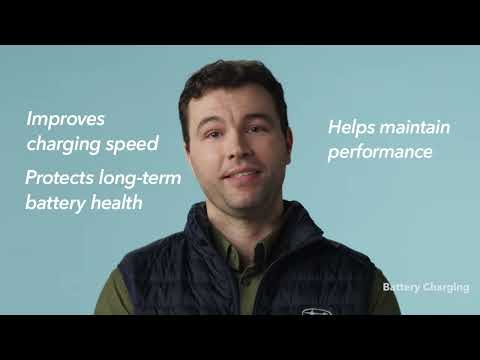
With proper pre-conditioning you can extend your driving range and keep your battery healthy long term. Pre-condition your vehicle by warming your cabin and battery before charging or parking inside when you can. On the go? Pre-conditioning will also speed up your charging time.***
Tip Subaru EVs offer a scheduled departure feature, so you can let your car know when you're going to head out on a trip, and it'll heat up the battery and cabin automatically. It's easy to do on the app.
Efficiently warms the cabin without draining the battery, so you stay cozy on cold mornings while maximizing your driving range.
Battery thermal management systems are equipped on nearly every EV, and its job is to keep the battery in its optimal temperature range, in order to maximize range, charging performance, and cold weather performance. The climate control system is also utilized to actively circulate coolant through the battery circuitry and electric motors to keep it within its optimal thermal limits, all year round.
• Learn how to get the most out of your Subaru EV in winter with our Winter Driving Tips from maximizing range to staying safe on slippery roads.
Superior Safety
Subaru EVs are built to inspire confidence, in every season and on every road. Many trims feature Symmetrical Full-time AWD, which continuously monitor each wheel to deliver the right power at the right time. The result? Exceptional traction, balance, and a connected, responsive drive that helps you stay in control, even when roads are slippery.
But safety doesn’t stop there. Every Subaru is thoughtfully engineered with EyeSight®1 Driver Assist, an advanced ring-shaped reinforcement frame, blind-spot detection, and advanced safety systems to help prevent accidents, protect occupants, and assist when it matters most. It’s more than solid engineering—it’s what makes Subaru a trusted choice.
Are EVs Worth the Cost?
Yes. EVs can cost more upfront, but home charging is cheaper than gas, maintenance is simpler, and incentives help balance the price. Over time, the savings add up.

Find Your Provincial EV Incentives
See which rebates and incentives may apply in your province or territory. Programs vary, and eligibility can change — always check the latest details from your regional government.
* Based on Natural Resources Canada’s (NRCan) approved guidelines. Refer to NRCan’s Fuel Consumption Guide available at https://fcr-ccc.nrcan-rncan.gc.ca/en
for more information. Full battery charge and ideal conditions are required. Figures will vary with driving and charging habits, speed, accessory use, weather and temperature, battery age, vehicle condition and road condition. In non-ideal conditions, figures may worsen by more than 50%. Battery capacity decreases with time and use which will further reduce range. See owner’s manual for details.
** Charging times and capacities are estimated based on ideal conditions and infrastructure. In cold weather, charging time will increase and charging capacity will decrease. Charging may not be possible when the battery is overly cold. Drive battery conditions, charger specifications, charging infrastructure and charging frequency can also negatively affect charging. See owner’s manual for details.
*** At temperatures as low as -10°C while using the vehicle’s battery preconditioning system.
1 EyeSight® is a driver-assist system which may not operate optimally under all driving conditions. The driver is always responsible for safe and attentive driving. System effectiveness depends on many factors such as vehicle maintenance, and weather and road conditions. See Owner’s Manual for complete details on system operation and limitations.
2 IIHS Ratings are awarded by the Insurance Institute for Highway Safety (IIHS). Please visit www.iihs.org for testing methods.